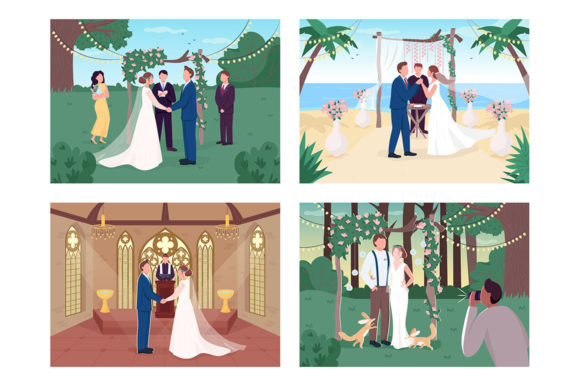
Religious and Civil Wedding Ceremony: A Visual Storytelling Guide
When you're designing for a wedding-related project, the visual language needs to do more than just look pretty—it has to tell a story. Whether you're creating an invitation suite, building a wedding planner brand, or developing social content for a bridal boutique, the imagery you choose sets the emotional tone before a single word is read. That's where thoughtfully crafted illustration sets like the Religious and Civil Wedding Ceremony collection come into play, offering designers and creators a versatile toolkit that captures both the sacred solemnity of a church wedding and the relaxed elegance of a civil ceremony.
Why Flat Color Vector Illustrations Work So Well for Wedding Design
Flat color illustration has become a dominant style in modern branding and digital design, and for good reason. The clean lines, bold shapes, and limited color palettes create imagery that feels contemporary without being trendy in a way that will date quickly. For wedding-related projects specifically, this style strikes a balance between sophistication and approachability—exactly the tone most clients and audiences are looking for.
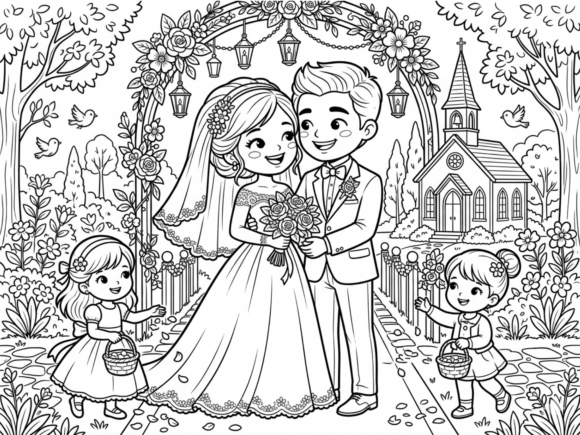
The Religious and Civil Wedding Ceremony illustration set takes this approach and applies it to one of life's most meaningful moments. The 2D cartoon-style bride and groom characters are rendered with enough detail to feel expressive but enough simplicity to work across different contexts. You're not locked into a hyper-specific aesthetic that only works for one type of brand. Instead, these illustrations can adapt to rustic barn weddings, modern city hall ceremonies, traditional church celebrations, and everything in between.
What makes this particular set especially useful is the inclusion of both landscape and interior backgrounds. A designer working on a save-the-date card might choose a church interior to emphasize the religious ceremony aspect, while someone building content for a civil ceremony planning service could use an outdoor landscape to convey a more relaxed, nature-inspired vibe. Having both options in a single collection means you're not scrambling to find complementary assets from different sources—a common headache that leads to visual inconsistency across a project.
Practical Applications Across Design Projects
The beauty of a well-organized illustration set is its versatility. Here's where a collection like this really earns its place in your design toolkit:
Invitation Suites and Stationery: Wedding invitations are arguably the most obvious application, but the illustrations extend well beyond the main invite. Think RSVP cards, detail cards, rehearsal dinner invitations, and thank-you notes. Using consistent character illustrations across the entire suite creates a cohesive experience for guests. The flat color style also reproduces beautifully on both digital printing and letterpress, which matters when you're working with clients who have specific production preferences.
Brand Identity for Wedding Professionals: If you're a designer building a brand for a wedding planner, officiant, photographer, or venue, illustration-based branding can set a client apart in a crowded market. Rather than relying on the same stock photography everyone else uses, custom-feeling illustrations create a distinctive visual identity. The characters in this set have enough personality to become recognizable brand assets—think of them appearing consistently across business cards, website headers, social media profiles, and printed materials.
Social Media Content and Digital Marketing: Content creators and marketers in the wedding space need a constant stream of fresh visuals. These illustrations work beautifully for Instagram posts, Pinterest pins, Facebook ads, blog headers, and email newsletter graphics. The PNG format with transparent backgrounds is particularly valuable here, allowing you to layer characters over your own brand colors, patterns, or photography without awkward white boxes or mismatched backgrounds.
Editorial and Blog Design: Wedding bloggers and magazine editors can use these illustrations to add visual interest to articles about ceremony planning, venue selection, or cultural wedding traditions. Illustrations often feel more inclusive than photography because they don't lock you into depicting specific real people—readers can project themselves into the characters more easily, which is a subtle but powerful engagement tool.
Packaging and Merchandise: Think beyond traditional wedding stationery. These illustrations could appear on wedding favor packaging, bridal shower decorations, custom tote bags, mugs for the wedding party, or even printed programs. The vector formats (EPS, SVG, AI) mean you can scale the artwork to any size without losing quality, whether you're printing it on a small favor tag or a large welcome sign.
Working With Multiple File Formats
One practical advantage of this illustration set is the range of file formats included. For designers who work across different software environments, this flexibility matters more than you might think.
The AI and EPS files are your go-to for professional print work. If you're using Adobe Illustrator or a compatible vector editor, these formats let you customize colors, resize elements, and modify compositions without any degradation. Need to change the bride's dress color to match a client's specific palette? Working with vectors makes that a five-minute adjustment rather than a complex Photoshop exercise.
The SVG format has become essential for web designers. Scalable Vector Graphics load quickly, look crisp on any screen resolution, and can be styled with CSS—meaning you can change colors directly in your website's code without creating new image files. For wedding industry websites where page load speed and visual quality both matter, SVG is increasingly the preferred format.
The PNG files with their transparency support are the workhorses for social media and quick design projects. When you need to drop an illustration into a template or composite without spending time on clipping paths, PNG files save significant production time.
And the JPG files serve as quick-reference versions or placeholders during the creative process, useful for client presentations where you want to show concepts without sharing editable files.
Making the Most of Your Illustration Investment
Getting real value from an illustration set comes down to how thoughtfully you integrate it into your workflow. A few practical suggestions based on real project experience:
Build a color system around the illustrations. Rather than using the illustrations as-is with their default colors, develop a cohesive palette that ties the characters to your broader design system. Pull accent colors from the illustration details—perhaps the church window tones or the landscape hues—and use those consistently across typography, backgrounds, and supporting graphics.
Create variations for different contexts. Use the full scene illustrations for hero images and headers, but crop into individual characters or details for smaller applications like social media profile images, favicon-sized graphics, or icon-style elements. The flat color style holds up well even at very small sizes, which isn't true of more detailed illustration styles.
Pair with the right typography. Illustration-heavy designs need typography that complements without competing. Clean sans-serif fonts work well for a modern aesthetic, while elegant serif typefaces can push the design toward a more traditional feel. Script fonts can add romance but should be used sparingly and at larger sizes where their details remain legible. The illustration style in this set is relatively neutral, so it pairs with a wider range of typographic choices than highly stylized artwork would.
Consider your audience's expectations. A religious wedding ceremony illustration set will resonate differently with different audiences. For brands serving traditional or faith-based communities, the church imagery carries significant meaning and should be featured prominently. For more secular or modern audiences, the civil ceremony elements and landscape backgrounds might be the better emphasis. Understanding who will see your designs helps you select and position the right elements from the collection.
Ultimately, design assets like the Religious and Civil Wedding Ceremony illustration set give you creative building blocks that save time while expanding your visual possibilities. The combination of thoughtful character design, versatile backgrounds, and professional file formats means you can move from concept to finished product more efficiently—whether you're designing a single invitation or building an entire brand identity for a wedding industry business. The key is treating these illustrations as a starting point for your own creative direction rather than a finished product that needs no further thought. Your clients and audience will notice the difference.